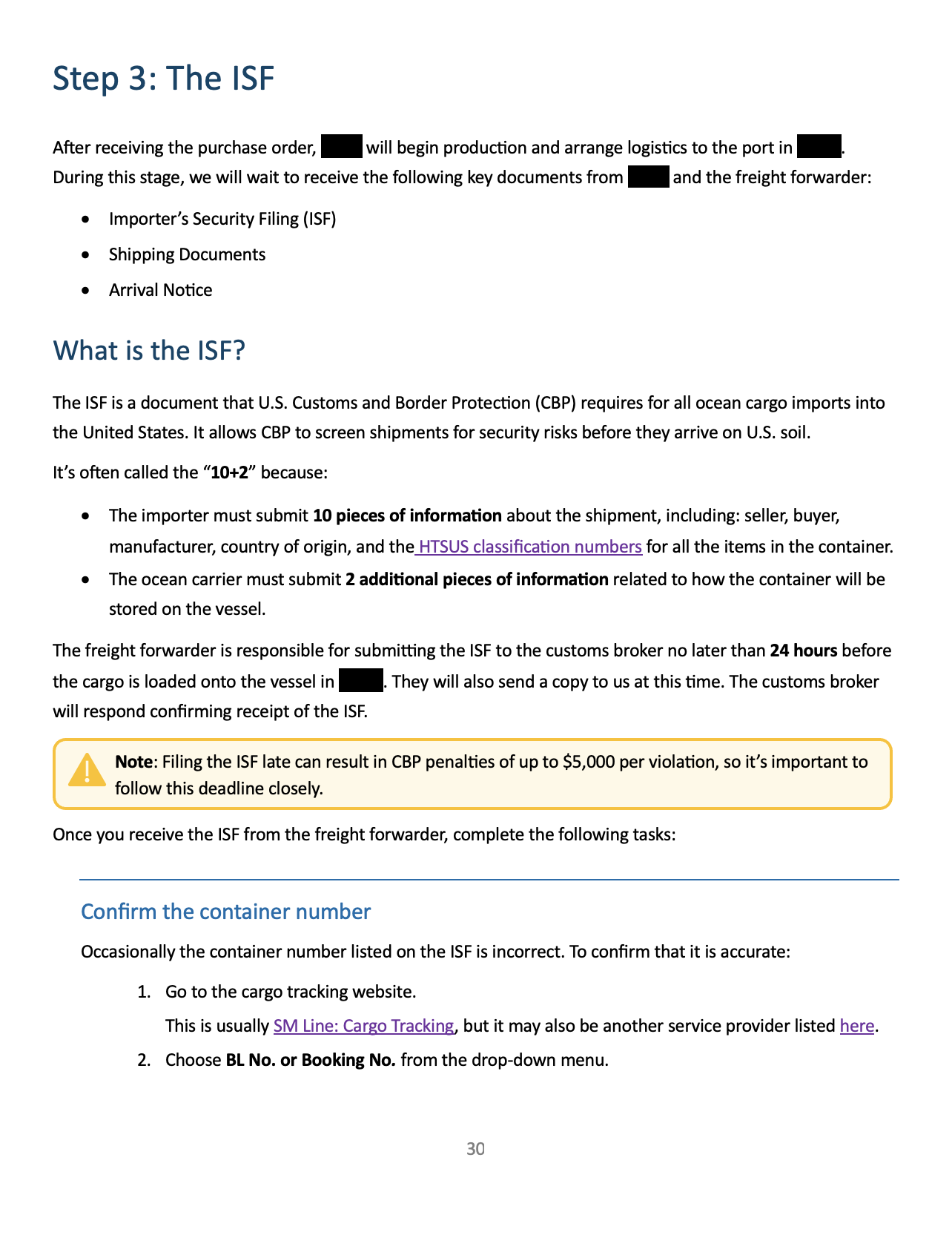
Newcomer-friendly explaination of the ISF and associated procedures
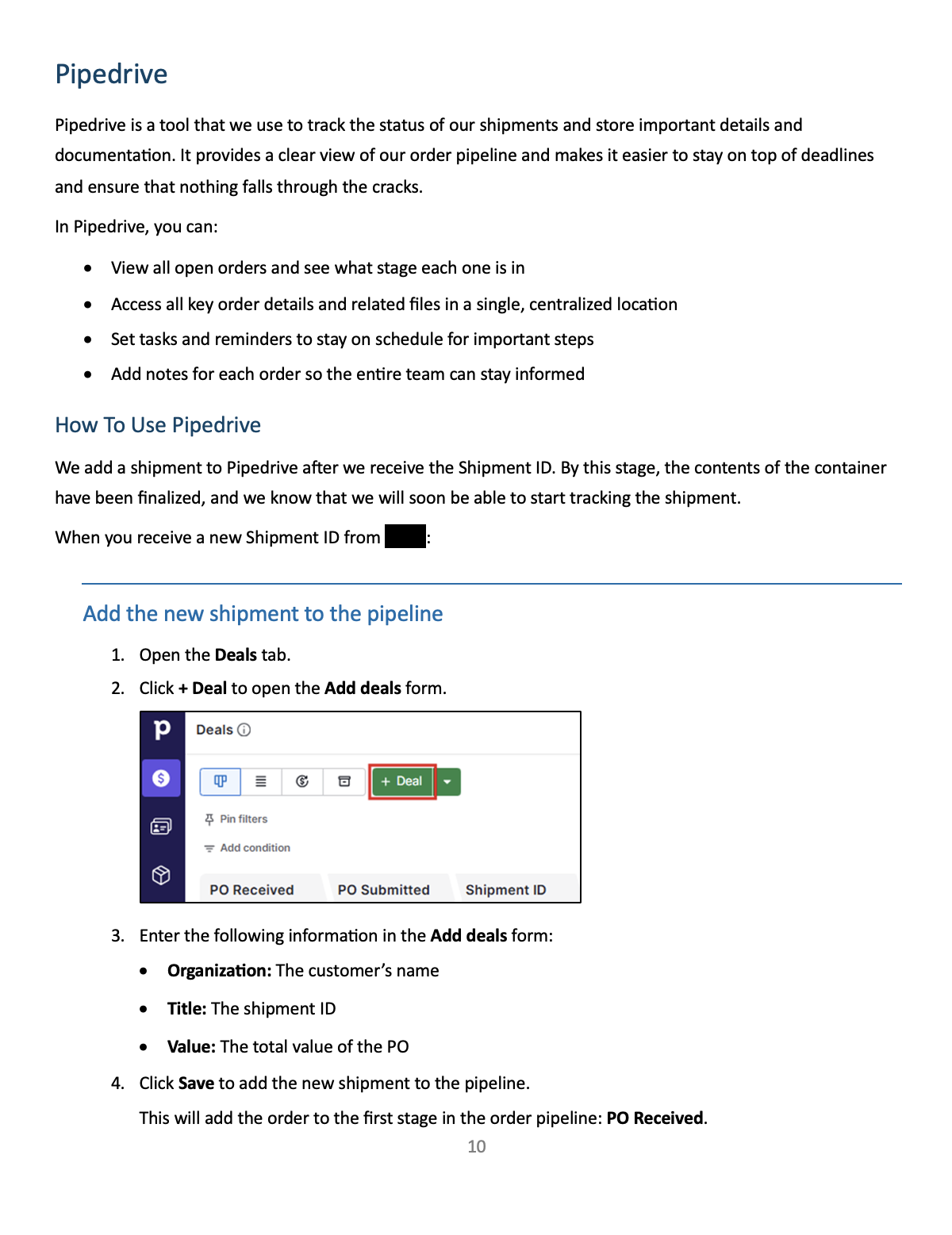
Introducing Pipedrive: the CRM that I customized for the team's workflow
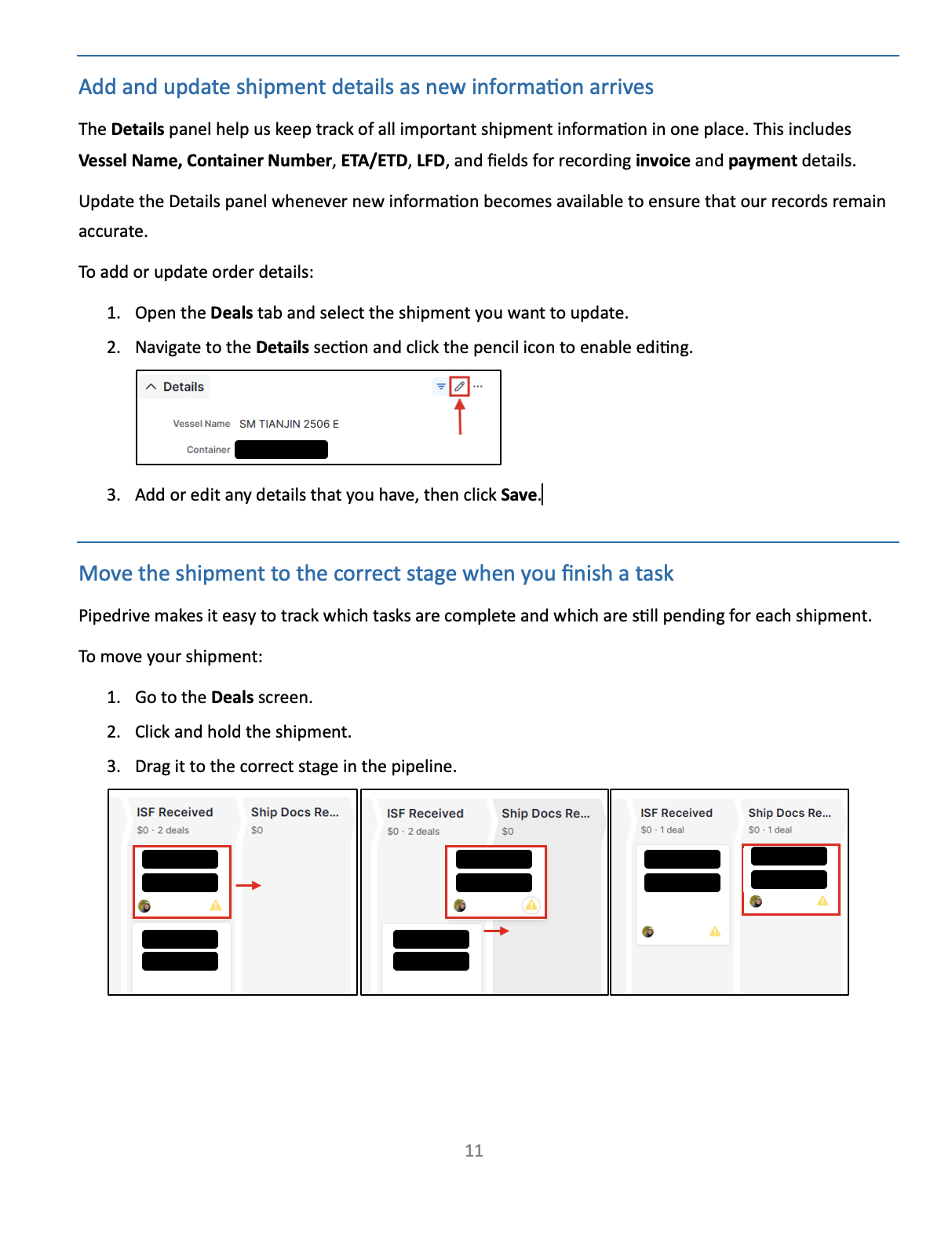
Step-by-step procedures with annotated UI screenshots
Click any page to expand
Process Documentation
Newcomer-friendly explaination of the ISF and associated procedures
Introducing Pipedrive: the CRM that I customized for the team's workflow
Step-by-step procedures with annotated UI screenshots
Click any page to expand
Problem
The logistics and sales coordinator role at a small custom packaging company had a significantly higher rate of turnover than other positions, largely due to a lack of effective training and support.
The team relied on scattered, outdated documentation and undocumented processes, making it difficult to find accurate information and maintain consistency across workflows. This left new hires overwhelmed and underprepared in a role that is already complex and detail-heavy.
Approach
I identified the need for a centralized documentation system and created a 150+ page operations manual to consolidate existing and undocumented processes into a single, easy-to-navigate resource.
I collaborated with team members to clarify workflows, uncover undocumented processes, and identify common pain points. Using these insights, I organized the content around core tasks and workflows, designing it to be easily navigable and usable in day-to-day work.
To further improve workflow visibility and organization, I introduced Pipedrive as a centralized workflow management tool and documented its use within the manual to support adoption.
Because the role can feel overwhelming for new hires, I prioritized clarity and approachability throughout the documentation. This included:
The final manual included:
Outcome
The manual was adopted as the team’s central knowledge resource and is used daily by both new and existing employees.
It played a key role in onboarding a new team member, enabling them to become functional quickly with minimal hands-on training.
By improving clarity, consistency, and workflow visibility, the documentation and supporting systems reduced friction in day-to-day work and helped stabilize a role with historically high turnover.
The manual ensured that institutional knowledge was preserved through a period of significant team transition, preventing the loss of undocumented processes that had existed only in the heads of two departing team members.